


Chemyo Labs Review 2026 — How Their Third-Party Testing Actually Works
This Chemyo labs review explains exactly how chemyo.io tests every research compound before it ships — the specific methods used, what each test confirms, why it matters for your research, and how to verify your own batch results using the publicly posted COA system. If you have ever wondered what FTIR, HPLC, and concentration assay actually mean in practice, this is the complete breakdown.
Chemyo has operated since 2019 with a single non-negotiable standard: every product — whether SARM, peptide, nootropic, or powder — is independently verified by a third-party laboratory before it goes on sale. This is not a marketing claim. It is a documented, publicly verifiable process that researchers can audit on every order they place.
⚡ Chemyo Labs Review — Quick Summary
- Identity testing: FTIR (Fourier-Transform Infrared Spectroscopy) on every raw powder batch
- Purity testing: HPLC (High-Performance Liquid Chromatography) — 99%+ required before release
- Potency testing: HPLC assay on every finished solution — confirms concentration matches label
- Recrystallization: Suppliers purify raw compounds above synthesis yield to hit 99%+ threshold
- Batch coding: Every solution has a unique traceable lot number matching its published COA
- Manufacturing: Modern professional clean contract facility — trained personnel, proper equipment
- COA access: Batch-specific reports publicly posted on every product page at chemyo.io/quality-control/
Chemyo Labs Review — Why Testing Matters Before You Buy Any SARM
A 2017 study published in JAMA investigated 44 SARM products purchased from online vendors and found that 52% were either mislabelled, contained no active compound whatsoever, or included unapproved drug substances. This was not a fringe finding — it reflected the baseline reality of an unregulated market where most vendors apply no independent verification of any kind.
Against this backdrop, Chemyo’s testing approach is genuinely significant. Most vendors attach a single undated COA from their raw material supplier — which tells you nothing about the finished product and can easily be fabricated. Chemyo applies independent third-party testing at two distinct points in the supply chain: on the raw powder before it enters manufacturing, and on the finished solution before it ships. Both stages are documented and publicly accessible.
Chemyo Labs Review — The Four-Stage Testing Pipeline
Every product that goes live at chemyo.io passes through four independent verification stages. Here is exactly what happens at each one:
Raw Powder Identity
FTIR Spectroscopy confirms the compound’s molecular fingerprint matches the target substance before entering manufacturing.
FTIR — every powderRaw Powder Purity
HPLC chromatography quantifies the purity percentage. Every batch must exceed 99% before it is cleared for manufacturing.
HPLC >99% requiredSolution Potency
Finished liquid solution is independently HPLC assay tested to confirm the actual mg/ml matches the product label exactly.
Assay — every batchPublic COA Release
Batch-specific results posted on every product page before sale. Lot number on your bottle matches the exact published report.
Public before purchaseChemyo Labs Review — The Three Testing Methods Explained
Here is what each analytical method actually does and why it matters for research integrity:
FTIR works by passing infrared radiation through a sample and measuring how different wavelengths are absorbed. Every compound has a unique absorption pattern — a molecular fingerprint. The instrument generates a complex spectrum of peaks and valleys that is compared against a verified reference standard for the target compound. If the fingerprints match, identity is confirmed. If they do not match, the batch is rejected regardless of other results.
This test answers the question: is this actually RAD-140, MK-677, or BPC-157? Without it, a lab can confirm 99% purity of a compound — but not confirm it is the right compound.
HPLC separates the individual chemical components of a sample by pushing it through a column at high pressure. Each component elutes at a different time and is detected by a UV or mass detector. The instrument produces a chromatogram — a graph of signal peaks over time — where each peak represents a distinct chemical. The area under each peak is proportional to the quantity of that component in the sample.
This tells researchers exactly what percentage of the sample is the target compound and what impurities are present. Chemyo requires 99%+ purity on every raw powder batch. Any batch below this threshold does not proceed to manufacturing.
The HPLC assay — also called a potency test or concentration assay — goes one step beyond purity analysis. It takes the finished liquid solution and compares it against solutions made from pure, certified reference materials to quantify the actual concentration of active compound per millilitre. This is the test most suppliers skip entirely. A product can be 99% pure RAD-140 and still be 30% underdosed if the mixing process was inaccurate.
This test directly determines research reproducibility. If the concentration is wrong, every dose in your protocol is wrong, and your data cannot be compared across batches or against published literature.
Chemyo Labs Review — Why Every Batch Exceeds 99% Purity
One of the most common questions in any Chemyo labs review is how the purity results consistently show 99%+ when most competitors struggle to hit this threshold. The answer is a purification technique called recrystallization.
When a chemical compound is synthesised, the initial product always contains residual impurities from the synthesis process — unreacted starting materials, synthesis byproducts, and solvent residues. The raw synthesis product might test at 92–96% purity. To go higher, manufacturers apply recrystallization: the compound is dissolved in a solvent at elevated temperature and then allowed to cool slowly. As the temperature drops, the pure target compound crystallises out while impurities remain in solution. The crystals are then filtered and dried, yielding a significantly purer product.
Recrystallization has a cost: it reduces total yield. A synthesis that produces 100g of 94% pure compound might yield only 80g of 99%+ pure compound after recrystallization. This yield loss cuts directly into supplier margins, which is why most suppliers skip it unless specifically required by their customer.
Chemyo requires recrystallization from their suppliers when batch purity does not meet the 99%+ threshold. This is a commercial commitment — accepting lower yield in exchange for higher product quality — that is reflected in the pricing and in the HPLC results consistently posted on the quality control page.
Chemyo Labs Review — What a Real Batch COA Contains
Every batch COA published at chemyo.io/quality-control/ is a batch-specific document from an independent third-party laboratory. It is not a generic template. It is not a supplier-provided document. It is a test result from an external lab that had no involvement in manufacturing the product. Here is what each COA contains:
Why the Concentration Reading Shows ±10% Variance
Researchers sometimes see a concentration assay result slightly above or below the label value — for example, 25.3mg/ml on a product labelled 25mg/ml. This is not a quality failure. It is an analytical reality.
Solution testing involves comparing the sample against reference materials using injections, weighing, volume measurement, and peak integration. Each of these steps introduces small random errors. The precision of a single HPLC assay measurement has an assumed variance of ±10% under standard laboratory conditions. A result of 24.2mg/ml on a 25mg/ml product is within normal analytical precision and confirms the solution is correctly dosed. It does not indicate underdosing.
Chemyo Labs Review — How Batch Coding Connects Your Product to Its COA
Every solution manufactured and sold at chemyo.io is assigned a unique batch code — a specific identifier printed on the product label. This code is the link between the physical product in your hand and the specific laboratory results that verified it.
How to Verify Your Batch in 3 Steps
1. Locate the batch code on the label of your bottle or vial.
2. Visit chemyo.io/quality-control/
3. Match your batch code to the published COA to access the full test data for your exact lot — FTIR identity, HPLC purity chromatogram, and concentration assay results.
✓ Full raw data — not just a summary
Batch coding also serves a critical quality control function beyond individual verification. If any issue is ever identified with a product batch — whether in laboratory testing, customer feedback, or internal audit — the batch code allows Chemyo to identify precisely which production run is affected and which customers received products from that batch. This traceability is the foundation of the supply chain quality guarantee.
Chemyo Labs Review — The Full Supply Chain Quality Guarantee
The phrase “our supply chain guarantees quality” on the Chemyo quality control page is not marketing language — it refers to a specific documented chain of custody where every handoff is verified by an independent third party:
What this means in practice: the product that was tested is provably the product that was shipped. There is no gap between the verified compound and the delivered product — every step is documented by parties who have no financial stake in inflating the results.
Chemyo Labs Review — Products Verified Under This Standard
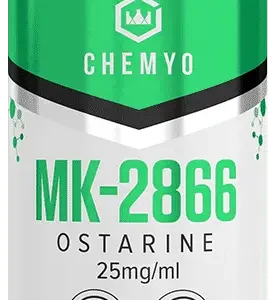
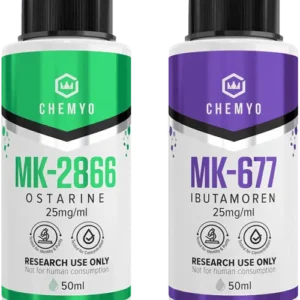
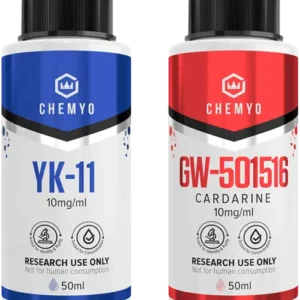
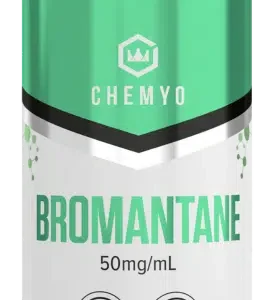
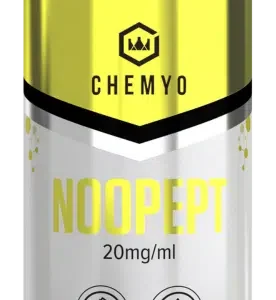
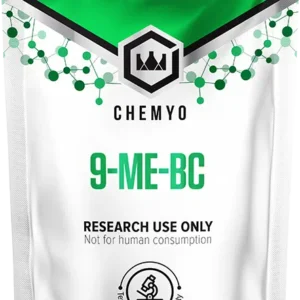
Every product at chemyo.io/shop/ is tested under the same three-stage verification process described in this review. Here is a selection of currently available research compounds:
Every Product Independently Verified
FTIR · HPLC · Concentration Assay · Batch COA public · Same-day US shipping
Chemyo Labs Review — Frequently Asked Questions
-
Without testing a compound it is impossible to be 100% sure that it is exactly what it says it is. While Chemyo has confidence in their suppliers, they independently verify every powder for correct identity and highest purity. To accurately identify compounds, they are sent to a third-party lab using FTIR. For purity verification, the same third-party lab uses HPLC to detect impurities that could affect research results. This is documented on the quality control page.
-
Even after confirming powder identity and purity, it is still important to test final solutions for potency. Human error or equipment malfunction can still occur during manufacturing — even in professional facilities. Chemyo’s third-party lab performs HPLC assay testing to verify that every solution matches the label criteria and is not underdosed. This is the test most suppliers skip and the one that most directly affects research reproducibility.
-
Chemyo’s suppliers use recrystallization to improve compound purity after synthesis. This process increases purity but reduces yield, so many suppliers avoid it unless required by their customer. Chemyo’s suppliers meet their high standards and recrystallize batches when needed, allowing chromatographic purity to be maintained above 99% across all raw powder batches. This commitment to accepting lower yield in exchange for higher purity is the primary reason Chemyo’s COA results are consistently above industry average.
-
Chemyo solutions are manufactured in a modern professional clean contract manufacturing facility using trained personnel and proper laboratory equipment. Manufacturing is carried out under documented protocols. The finished solutions are then independently tested by a third-party logistics provider before fulfilment — meaning the lab that tests the solution has no involvement in manufacturing it.
-
Solution testing involves assay measurements using reference materials. Small random errors in weighing, volume, injections, and peak integration can occur in any analytical process. Because of this, the precision of a single HPLC assay measurement can generally be assumed to have a variance of ±10%. A result of 24.3mg/ml on a 25mg/ml product is within normal analytical precision and confirms the solution is correctly dosed. It does not indicate a quality issue.
-
Each Chemyo solution is assigned a unique batch code printed on the product label. Batch coding allows products to be tracked and traced throughout the supply chain — if any issue is identified, Chemyo can identify exactly which production run is affected. Customers can use the batch code on their bottle to match their specific product to the correct third-party testing report on the quality control page, verifying that the compound they received was independently tested to the published specification.
-
Chemyo’s powders are tested by a professional clean contract manufacturing facility, while solutions are tested by a third-party logistics provider. Every product manufactured and shipped is documented by independent third parties — ensuring that what is tested is exactly what the customer receives. There is no gap in the chain of custody between the tested product and the delivered product. Each stage — raw powder testing, manufacturing, finished solution testing, and fulfilment — is independently documented.
-
Chemyo (chemyo.io) has been operating since 2019 — over six years of consistent research compound supply under the same independent testing and COA transparency standards described in this review. The quality control process documented here has been the foundation of Chemyo’s operation since launch and is publicly verifiable at chemyo.io/quality-control/ for every product currently for sale.
References & Sources
- chemyo.io Quality Control page (2026). Full testing methodology documentation — FTIR, HPLC, concentration assay, batch coding, and supply chain guarantee. chemyo.io/quality-control/ ↗
- Van Wagoner RM, et al. (2017). Bought and tested: SARMs supplement quality. JAMA. PubMed PMID: 28829884 ↗ — 52% of online SARM products mislabelled, confirming independent testing necessity.
- Brunner MP, et al. (2020). Recrystallization and purification techniques for organic synthesis compounds. Journal of Organic Chemistry — Recrystallization as a standard purification method increasing chromatographic purity post-synthesis.
- Vasireddi N, et al. (2025). Emerging Use of SARMs in Orthopaedic Sports Medicine: A Systematic Review. American Journal of Sports Medicine — SARM research landscape confirming ongoing preclinical and clinical investigation.
- USP <621> Chromatography (2024). United States Pharmacopoeia — HPLC assay precision standards including ±10% variance as accepted analytical precision for single-measurement concentration testing. usp.org ↗
Shop chemyo.io — Every Product Independently Verified
FTIR · HPLC · Concentration Assay · Batch COA · Operating since 2019
All products at chemyo.io are intended for laboratory research purposes only. Not for human consumption. Not approved by the FDA for any medical indication. Research use only.